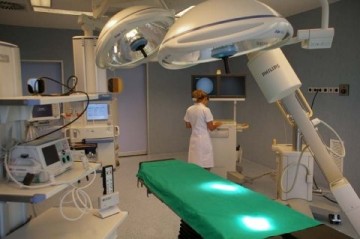
Coronary angiography is a medical procedure that is used to visualize and evaluate the coronary arteries that supply blood to the heart. It is performed to diagnose and treat various heart diseases.
Coronary angiography is usually performed in a hospital or outpatient center. The procedure includes the following steps::
- Preparation: The patient is given intravenous sedatives to relax him and reduce anxiety. The groin or wrist area is cleaned and anesthetized.
- Catheter insertion: A thin, flexible catheter is inserted into the artery of the groin or wrist. Under X-ray control, the catheter is guided through the arteries to the heart.
- Injection of contrast agent: A contrast agent is injected into the coronary arteries through a catheter, which makes them visible on X-rays.
- X-ray imaging: As the contrast agent passes through the coronary arteries, X-rays are taken that capture the condition of the arteries.
- Evaluation of results: After the procedure is completed, the doctor will analyze the X-rays to assess the condition of the coronary arteries, the presence of any narrowing or blockages, and determine the best course of treatment.
Coronary angiography may be prescribed for:
- Diagnosis of angina pectoris (chest pain)
- Assessment of the severity of coronary heart disease
- Detection and localization of blockages or narrowings in the coronary arteries
- Guidelines for procedures such as coronary artery stenting and bypass surgery
Coronary angiography is usually safe, but there are some contraindications, such as:
- Severe renal failure
- Allergy to contrast agent
- Uncontrolled blood clotting disorder
As with any medical procedure, there is a small risk of complications associated with coronary angiography, such as:
- Bleeding or hematoma at the catheter insertion site
- Damage to blood vessels
- Allergic reaction to contrast agent
- Myocardial infarction
- Stroke
Coronary angiography is a valuable procedure for the diagnosis and treatment of heart diseases. It allows doctors to visualize and assess the condition of the coronary arteries, identify blockages or narrowings, and determine the best course of treatment. Although the procedure is usually safe, there is a small risk of complications, and it is important to discuss them with your doctor before performing an angiography.